buteyko breathing method pdf
The Buteyko Method, detailed in numerous PDF guides and eBooks, offers a unique approach to health. It centers on consciously modifying breathing patterns for improved well-being, addressing chronic hyperventilation and its associated ailments.
Resources like Rakhimov’s work and guides from sites like DOKUMEN.PUB provide comprehensive instruction, detailing applications for over 100 diseases.
This modern breathwork technique, explored in guides like “Buteyko Breathing: A Guide to Better Breathing”, aims to restore healthy breathing habits.
Historical Background of the Buteyko Method
The Buteyko Method originated with Ukrainian physician Konstantin Pavlovich Buteyko in the 1950s. Initially focused on treating chronically ill children, particularly those with asthma, Buteyko observed a peculiar pattern: patients often experienced symptoms before experiencing a shortage of oxygen. This led him to challenge conventional medical wisdom.
Buteyko’s research, documented in various PDF resources available today, proposed that chronic hyperventilation – or over-breathing – was the root cause of many health problems. He theorized that excessive breathing led to a reduction in carbon dioxide (CO2) levels in the body, triggering physiological imbalances. His methods were initially met with skepticism from the mainstream medical community.
Despite the initial resistance, Buteyko’s techniques gained traction, particularly in Russia and Australia. Later, practitioners like Artour Rakhimov expanded upon his work, creating advanced exercises and compiling comprehensive guides, some available as eBooks, like “Advanced Buteyko Breathing Exercises”. These resources detail the evolution of the method and its broadening applications beyond asthma, as outlined in documents like those found on DOKUMEN.PUB.
The Core Principle: Reduced Breathing Volume
The central tenet of the Buteyko Method, thoroughly explained in available PDF guides and eBooks, revolves around intentionally reducing breathing volume. This isn’t about shallow breathing, but rather normalizing it to a level appropriate for the body’s metabolic needs. Conventional breathing is often deeper and faster than necessary, leading to chronic hyperventilation.
The method aims to gently retrain the respiratory system, increasing tolerance to CO2. Resources from practitioners like Artour Rakhimov emphasize that CO2 isn’t simply a waste product, but a vital regulator of numerous bodily functions, including oxygen delivery to tissues. Reducing breathing volume helps restore optimal CO2 levels.
Guides like those found on DOKUMEN.PUB detail how this principle applies to various health conditions. The goal is to shift from habitual over-breathing to a more relaxed, efficient breathing pattern, as detailed in “Buteyko Breathing: A Guide to Better Breathing”. This normalization is achieved through specific exercises and conscious awareness.
Availability of Resources: PDF Guides and eBooks
Numerous resources detailing the Buteyko Breathing Method are readily available in PDF and eBook formats. Amazon.com hosts “Advanced Buteyko Breathing Exercises” by Artour Rakhimov, geared towards individuals even with initial low Body Oxygen Test (BOT) scores. DOKUMEN.PUB provides a comprehensive guide outlining applications for over 100 diseases, covering the method’s structure and respiratory system basics.
These resources offer self-help guidance, though Rakhimov’s work suggests optimal results when starting with a BOT score of 25 seconds or higher. “Buteyko Breathing: A Guide to Better Breathing” provides an ultimate overview, explaining the technique’s differences from others and its benefits.
Free eBooks, like those found online, offer introductory overviews of the method and its impact on chronic hyperventilation. These materials facilitate self-learning and DIY approaches, empowering individuals to explore the Buteyko Method independently.

Understanding Chronic Hyperventilation
Chronic hyperventilation, a key focus of the Buteyko Method detailed in PDF guides, stems from modern lifestyles. These guides explain how over-breathing impacts health and CO2 levels.
How Modern Lifestyles Contribute to Over-Breathing
Modern lifestyles, as outlined in Buteyko Method PDF resources, significantly contribute to chronic over-breathing. The readily available information details how factors like stress, processed diets, and sedentary behavior promote a consistently elevated breathing rate. This isn’t necessarily conscious; it’s often an automatic response to perceived threats or discomfort.
These PDF guides emphasize that our “basic instinct” often drives us to breathe more deeply than necessary, believing it equates to increased oxygen intake. However, the Buteyko Method challenges this assumption, explaining that excessive breathing actually reduces carbon dioxide levels, leading to a cascade of physiological imbalances. The documents highlight how a lack of physical activity and a prevalence of indoor environments further exacerbate this issue, diminishing the body’s natural need to regulate breathing effectively.
Ultimately, the Buteyko approach, as presented in downloadable materials, aims to retrain breathing patterns to align with optimal physiological function, counteracting the detrimental effects of contemporary living.
The Link Between Hyperventilation and Health Issues
Buteyko Method PDF resources consistently demonstrate a strong link between chronic hyperventilation and a wide range of health problems. These documents explain that consistently low carbon dioxide (CO2) levels, a direct result of over-breathing, trigger physiological disturbances. This impacts oxygen delivery to tissues, despite the increased breathing rate.
The PDF guides detail how this CO2 depletion affects numerous bodily functions, contributing to conditions like asthma, anxiety, and even cardiovascular issues. Rakhimov’s work, available in eBook format, specifically outlines how hyperventilation impacts cellular function and immune response. The materials emphasize that it’s not a lack of oxygen, but a deficiency of CO2, that’s the core issue.
Furthermore, these resources highlight that many diseases are exacerbated, or even caused, by this chronic imbalance, offering the Buteyko Method as a potential pathway to restoration and improved health outcomes.
The Role of Carbon Dioxide in the Body
Buteyko Method PDF materials fundamentally challenge the common misconception that carbon dioxide (CO2) is merely a waste product. Instead, they emphasize its crucial role in regulating numerous physiological processes. These resources detail how CO2 is vital for oxygen delivery to tissues – the Bohr effect – where lower CO2 levels constrict blood vessels, hindering oxygen release.
PDF guides, including those by Rakhimov, explain that CO2 influences blood pH, nerve function, and cellular metabolism. Maintaining optimal CO2 levels is presented as essential for overall health and resilience. The documents highlight that the Buteyko Method aims to gently increase CO2 tolerance, restoring this natural balance.
These resources demonstrate that viewing CO2 not as a toxin, but as a key regulator, is central to understanding and applying the principles of the Buteyko Breathing technique effectively.
The Body Oxygen Test (BOT)
The Body Oxygen Test (BOT), detailed in Buteyko Method PDF guides, is a simple self-assessment. It measures breath-holding time, indicating cellular oxygenation levels and overall respiratory health.
BOT results guide personalized exercise selection.
What is the Body Oxygen Test?
The Body Oxygen Test (BOT), frequently described within Buteyko Method PDF resources and eBooks, is a straightforward, non-invasive assessment used to gauge the body’s oxygen levels at a cellular level. It’s a crucial tool for individuals exploring the Buteyko breathing technique, providing a baseline measurement and tracking progress. The test involves simply timing how long you can comfortably hold your breath after a normal exhale.
Unlike tests measuring lung capacity, the BOT assesses how efficiently your body utilizes oxygen. A shorter breath-hold time generally indicates over-breathing (chronic hyperventilation), while a longer time suggests more efficient oxygen delivery to tissues. This test isn’t about pushing your limits; it’s about observing your natural response. Detailed instructions are readily available in downloadable guides, ensuring accurate execution and interpretation. Rakhimov’s advanced materials emphasize its importance for tailoring exercises.
The BOT serves as a personalized benchmark, guiding the selection of appropriate Buteyko exercises.
Interpreting BOT Results (Under 15 Seconds, 25+ Seconds)
Interpreting your Body Oxygen Test (BOT) results, as detailed in Buteyko Method PDF guides, is key to understanding your breathing pattern. A result under 15 seconds typically signifies significant chronic hyperventilation, indicating a strong need for focused Buteyko exercises. Individuals with such scores often benefit from starting with basic reduced breathing techniques and gentle nose breathing practices.
Conversely, a BOT result of 25 seconds or more suggests relatively efficient oxygen utilization. While still potentially benefiting from Buteyko, these individuals may progress more quickly and can explore more advanced exercises. Rakhimov’s advanced materials are particularly relevant for those with higher scores.
It’s crucial to remember these are guidelines; PDF resources emphasize that individual responses vary. Consistent monitoring and adjustments, guided by the principles outlined in downloadable eBooks, are essential for optimal results.
Using the BOT to Track Progress
Tracking progress with the Body Oxygen Test (BOT), as outlined in Buteyko Method PDF resources, is fundamental to successful implementation. Regularly performing the BOT – ideally daily or several times a week – provides objective data on your breathing improvements. PDF guides emphasize recording your results to visualize trends over time.
An increasing BOT score demonstrates that the Buteyko exercises are effectively reducing hyperventilation and improving oxygen utilization. Plateaus are common; advanced eBooks, like those by Rakhimov, offer strategies to overcome them. Consistent practice, guided by the principles in downloadable materials, is vital.
Remember, the BOT isn’t a competition. It’s a tool for self-assessment. PDF resources caution against pushing yourself too hard. Focus on gradual, sustainable improvements, and adjust your exercises accordingly.
Key Buteyko Breathing Exercises
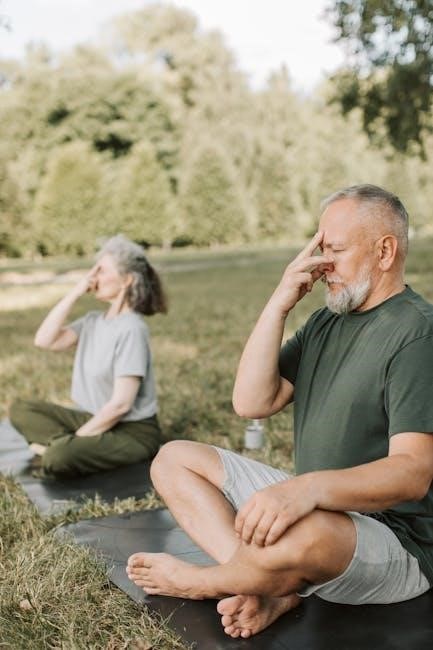
Buteyko Method PDF guides detail core exercises like reduced breathing, the Control Pause (CP), and nose breathing. These techniques, from Rakhimov’s work, aim to normalize breathing patterns.
Practicing these exercises consistently, as instructed in downloadable resources, is crucial for achieving positive health outcomes.
Reduced Breathing Exercises: The Basics
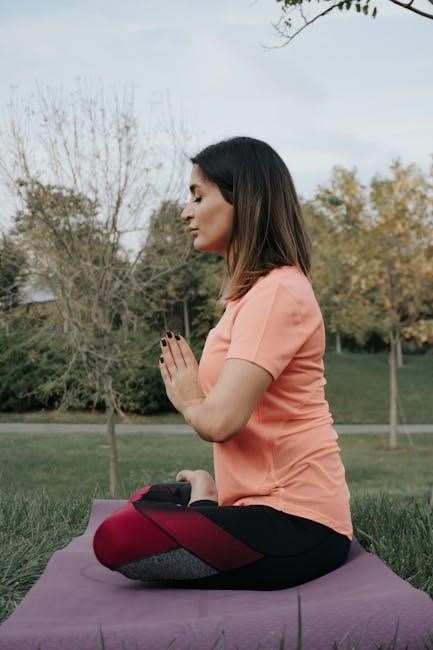
Reduced breathing exercises, a cornerstone of the Buteyko Method as detailed in available PDF resources, involve consciously decreasing the volume of each breath. This isn’t about shallow breathing, but rather a gentle reduction from your habitual, often overblown, breathing pattern. The goal is to gently lower ventilation, increasing carbon dioxide levels in the body – a process often misunderstood but vital to the method’s success.
Many PDF guides, including those by Rakhimov, emphasize starting slowly. Begin by simply observing your breath, noticing its depth and pace. Then, subtly reduce the depth of each inhale and exhale. Focus on breathing through the nose, as this naturally filters and warms the air, and promotes nitric oxide production, further aiding the process.
Initially, you might experience slight air hunger or a desire to take a deeper breath. Resist this urge! The body will adapt over time. Consistent practice, guided by the instructions in Buteyko Method eBooks, is key to retraining your breathing reflexes and achieving lasting benefits. Remember, the aim is not to eliminate breathing, but to optimize it.
The Control Pause (CP) Exercise
The Control Pause (CP) exercise, a central component of the Buteyko Method, is frequently explained in detail within PDF guides and eBooks. It’s a simple yet powerful technique used to measure and improve your body’s oxygen tolerance. Begin by taking a normal breath in, then gently exhale, stopping airflow at the end of the exhale – holding your breath comfortably.
Time how long you can comfortably hold your breath without straining or feeling significant discomfort. This is your CP time. Resources like Rakhimov’s advanced exercises PDF highlight that a CP under 15 seconds indicates significant over-breathing.
The CP isn’t about pushing your limits; it’s about observing your body’s response. Regularly performing and tracking your CP, as outlined in Buteyko resources, provides valuable insight into your progress. Improved CP times correlate with reduced breathing volume and improved health markers. Remember to always practice safely and listen to your body.
Nose Breathing Techniques
Nose breathing is a foundational principle of the Buteyko Method, extensively detailed in available PDF guides and eBooks. Unlike mouth breathing, nasal breathing filters, warms, and humidifies the air, optimizing oxygen uptake. It also stimulates nitric oxide production, enhancing blood vessel dilation and oxygen delivery.
Buteyko exercises emphasize transitioning from mouth to nose breathing throughout the day, even during light activity. Resources, including those by Rakhimov, often include specific drills to retrain breathing patterns. These drills may involve consciously closing the mouth and focusing on diaphragmatic breathing through the nose.
PDF materials highlight that consistent nose breathing helps to normalize breathing volume, increase carbon dioxide tolerance, and reduce the symptoms associated with chronic hyperventilation. Mastering this technique is crucial for achieving the full benefits of the Buteyko Method.
Buteyko Method for Specific Conditions
Buteyko Method PDF resources detail applications for numerous conditions, including asthma and COPD. Guides like those on DOKUMEN.PUB list over 100 diseases potentially benefiting from this technique.
These materials outline tailored exercises for specific ailments, emphasizing normalized breathing patterns.
Asthma and the Buteyko Method

Asthma sufferers often experience chronic hyperventilation, a key area addressed by the Buteyko Method, as detailed in available PDF guides and eBooks. These resources explain how reduced breathing volume can alleviate asthma symptoms by normalizing carbon dioxide levels in the body.
The method doesn’t aim to cure asthma, but rather to manage it by reducing reliance on medication and improving overall respiratory function. Specific exercises, outlined in materials like Rakhimov’s advanced guides, focus on retraining breathing patterns to promote nasal breathing and a slower, shallower breath.
Many individuals report a significant decrease in reliever medication usage and improved quality of life after practicing the Buteyko technique. However, it’s crucial to continue working with a healthcare professional while implementing these breathing exercises, and PDF resources emphasize this point. Success often correlates with consistent practice and a thorough understanding of the method’s principles.
Chronic Obstructive Pulmonary Disease (COPD) and Buteyko
Chronic Obstructive Pulmonary Disease (COPD), like asthma, is often linked to chronic hyperventilation, making the Buteyko Method a potentially beneficial approach. Numerous PDF eBooks and online guides detail how the method aims to improve breathing patterns in COPD patients, focusing on reducing over-breathing.
The core principle involves retraining the body to tolerate and even benefit from slightly lower oxygen levels and normalized carbon dioxide levels. Resources, including those available for free download, emphasize that Buteyko isn’t a cure, but a management technique to alleviate symptoms and improve quality of life.
Exercises detailed in these materials, particularly advanced guides, focus on nasal breathing and reduced breathing volume. While promising, it’s vital for COPD sufferers to continue medical supervision and use Buteyko as a complementary therapy, as highlighted in various PDF documents.
Application to Over 100 Diseases (Overview)
The Buteyko Method, extensively documented in PDF guides like those found on DOKUMEN.PUB, proposes a broad application scope, extending beyond respiratory conditions to over 100 diseases. This stems from the central idea that chronic hyperventilation underlies many health issues, impacting cellular function and overall physiology.
These PDF resources categorize conditions benefiting from the method, including cardiovascular problems, neurological disorders, skin conditions, and even psychological ailments. The approach isn’t about directly treating the disease, but addressing the root cause – imbalanced breathing – to support the body’s natural healing processes;
However, it’s crucial to understand that these applications are based on the method’s principles and require careful self-assessment or, ideally, guidance from a certified practitioner. PDF eBooks often emphasize that Buteyko should complement, not replace, conventional medical treatment.

Advanced Buteyko Techniques
Advanced techniques, detailed in PDF resources like Rakhimov’s work, cater to individuals with lower Body Oxygen Test (BOT) scores. These exercises build upon foundational practices for optimal results.
PDF guides offer self-learning options, but practitioner guidance is recommended for personalized instruction and safe progression through these complex methods.
Exercises for Individuals with Low BOT Scores
Individuals achieving Body Oxygen Test (BOT) results under 15 seconds often require a modified approach to Buteyko exercises, as highlighted in advanced PDF guides like Artour Rakhimov’s “Advanced Buteyko Breathing Exercises”. These resources emphasize gentle, incremental progress, avoiding overexertion that can exacerbate symptoms.
Initial exercises focus on nasal breathing, even during light activity, to promote carbon dioxide retention. The PDF materials suggest starting with very short Control Pause (CP) attempts, gradually increasing duration as tolerance improves. Emphasis is placed on relaxed diaphragmatic breathing, minimizing chest movement.
Specific exercises detailed in these PDFs include “breathing exercises from over 100 diseases”, tailored to individual health conditions. The goal isn’t immediate improvement, but rather a slow, steady increase in the BOT score, indicating improved cellular oxygenation. Consistent, mindful practice, guided by the PDF instructions, is crucial for success.
It’s important to note that these advanced techniques require patience and self-awareness, and consulting a certified practitioner is highly recommended.
Advanced Exercises from Rakhimov’s Work
Artour Rakhimov’s work, particularly his PDF eBook “Advanced Buteyko Breathing Exercises”, delves into techniques beyond the foundational Buteyko method. These exercises are designed for individuals with established practice and a Body Oxygen Test (BOT) score of 25 seconds or higher, as the PDF explicitly states.
Rakhimov’s approach emphasizes cyclical breathing patterns, incorporating specific pauses and reduced breathing volumes to maximize carbon dioxide levels. The PDF details exercises targeting specific physiological responses, aiming to normalize breathing and improve overall health. These aren’t simple techniques; they require precise execution and self-monitoring.
The PDF outlines variations of the Control Pause, incorporating breath holds after exhalation and inhalation, alongside specialized nasal breathing drills. Rakhimov’s work also explores the application of these exercises to a wide range of conditions, offering tailored protocols within the PDF guide.
Successful implementation necessitates a thorough understanding of the underlying principles, as detailed in the PDF, and a commitment to consistent, mindful practice.
Self-Learning and DIY Approaches
Self-learning the Buteyko Method, utilizing available PDF guides and eBooks, is possible, but requires diligence. Resources like those found on DOKUMEN.PUB and Amazon’s Kindle store offer comprehensive instructions for independent practice. However, achieving optimal results often depends on initial Body Oxygen Test (BOT) scores; a score of 25 seconds or higher is frequently recommended for advanced techniques.
DIY approaches necessitate consistent self-monitoring and adherence to the principles outlined in the PDF materials. Beginners should start with basic reduced breathing exercises and gradually progress, carefully tracking their BOT scores to gauge improvement.
While PDF guides provide detailed protocols, the absence of personalized guidance from a certified practitioner can present challenges. It’s crucial to prioritize safety and avoid pushing beyond one’s comfort level. Rakhimov’s advanced PDF is best suited for those with a solid foundation.
Careful study of the PDF and mindful practice are key to successful self-directed learning.

Resources for Learning the Buteyko Method
Numerous PDF eBooks, like those by Rakhimov and found on DOKUMEN.PUB, detail the Buteyko Method. Digital tools and apps also support practice, alongside certified practitioners.
Recommended PDF eBooks and Online Guides
Delving into the Buteyko Breathing Method often begins with readily available PDF resources. Artour Rakhimov’s “Advanced Buteyko Breathing Exercises (Buteyko Method Book 2)” on Amazon Kindle is a highly recommended starting point, particularly for those with initial Body Oxygen Test (BOT) scores under 15 seconds. This advanced text provides detailed exercises for improvement.
Another valuable resource is the comprehensive guide available on DOKUMEN.PUB, titled “Buteyko Breathing Method Unique breathing exercises from over 100 diseases and health conditions.” It offers a broad overview, covering the method’s application to various ailments and outlining contraindications.
For a more general introduction, “Buteyko Breathing: A Guide to Better Breathing, Sleep, and More” provides a foundational understanding of the technique, its benefits, and how it differs from other breathing exercises. These PDF guides, alongside online resources, empower individuals to begin their Buteyko journey with informed self-learning.
Apps and Digital Tools for Buteyko Practice
While numerous PDF guides initiate the Buteyko journey, digital tools enhance consistent practice. Currently, specific dedicated Buteyko apps aren’t prominently highlighted in the provided resources, suggesting a reliance on self-monitoring alongside the principles learned from eBooks like Rakhimov’s “Advanced Buteyko Breathing Exercises.”
However, general breathwork and mindfulness apps can be adapted to support Buteyko techniques, particularly for tracking the Control Pause (CP) exercise and monitoring breathing patterns. Users can leverage timer functions to adhere to reduced breathing exercises outlined in the PDF materials from sources like DOKUMEN.PUB.
Spreadsheets or simple note-taking apps are also valuable for logging Body Oxygen Test (BOT) results, charting progress over time, as emphasized in the guides. Effectively, the core PDF resources provide the knowledge, and adaptable digital tools facilitate consistent application and self-assessment.
Finding Certified Buteyko Practitioners
While PDF guides and eBooks, such as those by Rakhimov and resources on DOKUMEN.PUB, provide a foundation for self-learning the Buteyko Method, personalized guidance from a certified practitioner can significantly accelerate progress. The provided information doesn’t directly list directories for finding practitioners.
However, a thorough online search utilizing keywords like “Certified Buteyko Practitioner” combined with your location is recommended. Organizations dedicated to breathing retraining often maintain lists of qualified instructors.
Consider that the depth of information within advanced PDF materials may necessitate expert oversight, particularly for individuals with complex health conditions or those achieving limited results with self-directed practice. A practitioner can tailor exercises and provide feedback, optimizing the method’s effectiveness beyond what’s detailed in the downloadable guides.








Leave a Comment