indesit inverter motor washing machine manual
Indesit Inverter Motor Washing Machine Manual: A Comprehensive Guide
Welcome! This guide provides detailed instructions for Indesit inverter washing machines, covering operation, maintenance, and troubleshooting. Access manuals via Argos product codes or the Indesit website.
Understanding Indesit Inverter Technology
Indesit’s inverter motor technology represents a significant advancement in washing machine efficiency and performance. Unlike traditional motors, inverter motors utilize electronic controls to precisely adjust the drum’s speed, resulting in quieter operation and reduced energy consumption.
This technology allows for a wider range of spin speeds and more delicate wash cycles, protecting your garments. Inverter motors are also known for their increased durability and reliability, offering a longer lifespan compared to conventional motors. They contribute to lower noise levels during operation, enhancing the overall user experience.

Key Features of Indesit Inverter Washing Machines
Indesit inverter washing machines boast several key features designed for convenience and optimal cleaning. These include various wash programs tailored to different fabric types – cotton, synthetics, delicates, and wool – ensuring gentle care for all your laundry.
Many models offer large drum capacities, like 8kg or 9kg, accommodating substantial loads. Integrated washer dryers, such as the 7kg wash/5kg dry models, provide space-saving versatility. Features like spin speed selection (up to 1400 RPM) and user-friendly control panels enhance usability.
Locating Your Washing Machine’s Model Number

Identifying your Indesit washing machine’s model number is crucial for accessing the correct documentation and support. This number is essential when downloading the instruction manual or contacting customer service. Typically, the model number is found on a sticker located on the rear of the appliance.
Look for a label, often near the base, containing alphanumeric characters like 097BIWDIL75125UKN, BWA81483X, or XWA 81252X. Argos product codes (e.g., 653/1858, 655/8491, 447/8157) can also help pinpoint your specific model.
Control Panel Overview
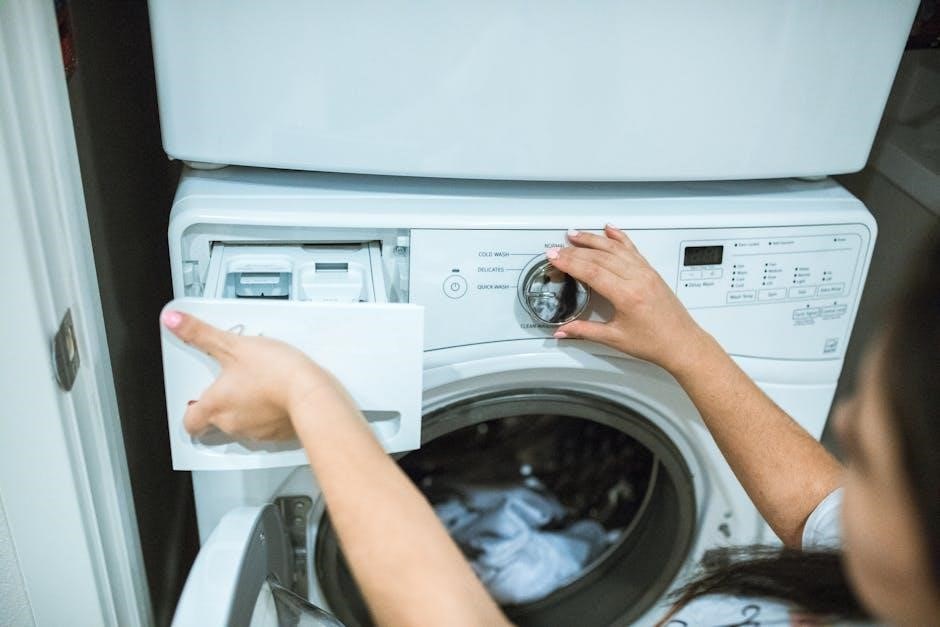
The Indesit control panel is designed for intuitive operation of your washing machine. Central to this is the program selector dial, used to choose wash cycles like cottons, synthetics, and delicates. A digital display presents cycle progress and remaining time, alongside indicator lights for options selected.
Essential buttons include Start/Pause for cycle control, and various option buttons to customize washes. Refer to your specific model’s manual (identified by its number) for detailed explanations of each function.
Understanding the Program Selector Dial
The program selector dial is your primary interface for choosing the appropriate wash cycle. Rotating the dial aligns the indicator with different program options, such as cottons for durable fabrics, synthetics for blends, and delicate/wool for sensitive items.
Specific programs cater to varying soil levels and desired wash intensities. Consult your machine’s manual – identified by its model number – to fully understand each program’s settings and recommended use cases for optimal cleaning results.
Display Symbols and Indicators
The washing machine’s display utilizes various symbols and indicators to communicate its status. These include cycle progress, remaining time, temperature selection, and spin speed. Error codes, when displayed, signal specific issues requiring attention – consult the manual for decoding.
Indicators also highlight selected options like pre-wash or intensive stain removal. Familiarizing yourself with these symbols, as detailed in your model’s user guide, ensures effective operation and troubleshooting.
Start/Pause and Option Buttons
The Start/Pause button initiates or temporarily halts the selected wash cycle. Pressing it during operation allows for adding or removing items, if safe. Option buttons modify the cycle, enabling features like temperature adjustment, spin speed reduction, or pre-wash activation.
These buttons are often indicated by specific symbols. Refer to your model’s manual for a complete understanding of each option’s function and impact on the wash cycle. Proper use optimizes cleaning performance.
Loading and Unloading the Washing Machine
Proper loading is crucial for optimal performance. Distribute items evenly within the drum to maintain balance and prevent excessive vibration. Avoid overloading, as this reduces cleaning effectiveness and can damage the machine.
Always remove all items promptly after the cycle finishes to prevent mildew. Check pockets for objects before loading. Refer to the manual for specific maximum load capacities based on fabric type, ensuring efficient and safe operation.
Maximum Load Capacity by Fabric Type
Cotton items, being more robust, generally allow for a full load – typically 7kg to 9kg depending on your model (BWA81483X, BWE91484X). Synthetic fabrics require a reduced load, around 3.5kg to 4kg, to prevent creasing and damage.
Delicate materials, like silk or lingerie, should be washed in smaller loads, approximately 1kg to 2kg, ensuring gentle handling. Always consult your specific model’s manual for precise capacity guidelines to optimize washing performance.
Proper Garment Sorting Techniques
Separate clothes by color – whites, lights, and darks – to prevent dye transfer. Distinguish fabric types: cottons with cottons, synthetics with synthetics, and delicates separately. Check pockets for items like coins or keys.
Close zippers and hooks to avoid snagging other garments. Turn delicate items inside out for added protection. Properly sorting ensures optimal cleaning and extends the lifespan of your clothes, maximizing your Indesit washing machine’s efficiency.
Detergent and Fabric Softener Dispenser
The dispenser is crucial for optimal wash results with your Indesit inverter machine. Use only detergents specifically designed for washing machines; avoid hand-wash detergents. Powder or liquid detergents go into the main wash compartment, indicated by “II” or a similar symbol.
Fabric softener is added to the compartment marked with a flower or “*”. Never overfill; follow detergent manufacturer’s instructions. Regularly clean the dispenser to prevent blockages and ensure proper dispensing.
Types of Detergent Compatible with Inverter Models
Indesit inverter washing machines are compatible with a wide range of detergents, including powder, liquid, and gel formulations. Low-foam detergents are highly recommended, especially for models with automatic dispensing systems, preventing excessive suds. Consider using concentrated detergents for improved cleaning performance and reduced environmental impact.
Avoid using detergents intended for hand washing, as they create too many suds. Always follow the detergent manufacturer’s dosage recommendations based on load size and water hardness.
Dispenser Compartment Guide
The detergent dispenser typically features three compartments. Compartment I, often marked with a Roman numeral ‘I’ or a symbol, is for pre-wash detergent. Compartment II, usually indicated by ‘II’, is for main wash detergent. Compartment, often symbolized by a flower, is for fabric softener.
Ensure detergents are added to the correct compartments to optimize wash results. Avoid overfilling, as this can cause residue. Liquid detergents can be directly added to the drum if preferred, following garment care label instructions.
Wash Cycle Selection
Indesit inverter machines offer diverse wash cycles tailored to various fabrics. Cotton programs are ideal for durable everyday items, utilizing higher temperatures for effective cleaning. Synthetic programs provide gentler washing for blended fabrics, preserving color and shape.
Delicate/Wool programs employ low temperatures and reduced agitation, safeguarding sensitive materials. Carefully review garment care labels before selecting a cycle to ensure optimal results and prevent damage. Utilize the program selector dial to choose the appropriate setting.
Cotton Programs: Detailed Explanation
Indesit’s cotton programs are designed for robust, everyday laundry like bed linens and towels. Intensive Cotton tackles heavily soiled items with higher temperatures and extended wash times. Eco Cotton offers energy-efficient cleaning at a lower temperature, ideal for lightly soiled loads.

Normal Cotton provides a balanced wash for standard cotton items. Quick Cotton delivers a faster wash for smaller, lightly soiled loads. Always check garment care labels and adjust temperature settings accordingly for optimal results.
Synthetic Programs: Optimal Settings
Indesit synthetic programs cater to fabrics like polyester and nylon, requiring gentler treatment than cotton. Synthetic Standard is suitable for everyday synthetic items with moderate soiling. Delicate Synthetics offers a lower temperature and reduced agitation for more fragile synthetics.
Easy Iron minimizes creasing through a gentler spin cycle. Mixed Fabrics allows washing a combination of synthetics and cottons, but avoid washing darks with lights. Always consult garment care labels for specific washing instructions.
Delicate/Wool Programs: Gentle Care
Indesit’s delicate and wool programs are designed for items needing extra care, preventing shrinkage and damage. The Woolmark Apparel Care program, certified by Woolmark, ensures optimal washing of woollens; Hand Wash simulates hand washing, ideal for very delicate fabrics.
Silk offers a specialized cycle for silk garments. Delicates provides a gentler wash for lingerie and similar items. Always use a detergent specifically formulated for delicate fabrics and avoid high spin speeds to protect fibers.
Troubleshooting Common Issues
Encountering problems? This section addresses frequent issues with your Indesit inverter washing machine. Error codes displayed on the control panel indicate specific malfunctions – consult your manual for interpretations. Drainage problems often stem from a blocked filter; regular cleaning is crucial.
No spin issues could be due to an unbalanced load or a kinked drain hose. Always check these before seeking further assistance. Refer to the user guide for detailed troubleshooting steps and potential solutions.
Error Codes and Their Meanings
Decoding the signals! Your Indesit inverter washing machine utilizes error codes to pinpoint malfunctions. These codes, displayed on the control panel, require referencing your specific model’s manual for accurate interpretation. Common codes relate to water supply, drainage, or motor issues.
Understanding these codes empowers you to diagnose problems independently. Always consult the manual before attempting repairs, and note the code before contacting customer support for efficient assistance.
Dealing with Drainage Problems
Blocked drain? If your Indesit washing machine isn’t draining, first check the drain hose for kinks or obstructions. Ensure it isn’t inserted too far into the drainpipe, restricting flow. Next, inspect the pump filter – a common culprit for blockages – following the manual’s instructions for safe access and cleaning.
Persistent issues may indicate a pump failure, requiring professional repair. Always disconnect the machine from the power supply before any inspection or maintenance.
Addressing No Spin Issues
Machine won’t spin? An unbalanced load is a frequent cause; redistribute items evenly within the drum. Verify the lid switch is functioning correctly, as a faulty switch prevents operation. Check the drain hose – if not fully drained, the machine won’t spin.
Further checks include inspecting the drive belt (if applicable) and potentially a motor issue, requiring a qualified technician’s assessment. Always prioritize safety by disconnecting power first.
Maintenance and Cleaning
Regular upkeep extends your machine’s life! Clean the drum monthly with a washing machine cleaner, running a hot cycle. Inspect and clean the door seal after each wash to prevent mold. The filter requires periodic cleaning – consult your model’s manual for location and procedure.
Exterior care involves wiping down surfaces with a damp cloth. Avoid abrasive cleaners. Consistent maintenance ensures optimal performance and prevents costly repairs.
Cleaning the Drum and Door Seal
Prevent odors and residue! Run a hot wash cycle monthly using a dedicated washing machine cleaner. This effectively removes buildup. After each wash, wipe the rubber door seal thoroughly with a damp cloth. Pay close attention to folds where mold can accumulate.
Inspect regularly for any signs of mildew or debris. A clean seal ensures a watertight closure and prolongs the life of your Indesit washing machine.
Filter Cleaning Procedures
Essential for performance! Locate the filter access panel, usually at the bottom front of your Indesit machine. Have a shallow container and towels ready to catch any water. Carefully unscrew and remove the filter cap, slowly, as water may spill.
Remove debris like lint, coins, and hair. Rinse the filter thoroughly under running water. Reinstall securely, ensuring a tight seal to prevent leaks. Clean regularly for optimal drainage.
Exterior Cleaning Recommendations
Keep it pristine! Regularly wipe down the exterior of your Indesit washing machine with a damp, soft cloth. Avoid abrasive cleaners, as they can damage the finish. For stubborn marks, use a mild detergent solution, then rinse and dry thoroughly.
Pay attention to the control panel and door seal. Ensure the area around the machine is kept dry and free from dust. This simple maintenance extends the life and appearance of your appliance.
Safety Precautions
Prioritize safety! Always disconnect the washing machine from the power supply before cleaning or maintenance. Electrical safety is paramount – never operate the machine with a damaged cord or plug. Utilize the child lock function to prevent accidental operation, especially around young children.
During transportation and storage, secure the drum to avoid damage. Follow all provided instructions carefully to ensure safe and reliable operation of your Indesit appliance.

Electrical Safety Guidelines
Crucially, always ensure the washing machine is properly grounded to prevent electric shock. Never operate the appliance with a damaged power cord or plug; replace immediately. Avoid using extension cords or multi-plugs as they can overload the circuit.
Do not attempt to repair electrical components yourself – contact a qualified technician. Keep the appliance away from water sources and ensure hands are dry before handling. Prioritize a safe electrical environment for optimal performance.
Child Lock Function Operation

Activate the Child Lock to prevent unintended program changes or operation by children. Typically, this involves pressing and holding two specific buttons simultaneously on the control panel – consult your model’s manual for the exact combination.
Once engaged, the buttons will be deactivated, and a corresponding indicator light will illuminate. To disengage, repeat the button combination. Ensure the lock is deactivated when you need to operate the machine, prioritizing safe and controlled usage.
Transportation and Storage Instructions
Before moving your Indesit washing machine, disconnect it from the power and water supply. Secure the transport bolts, located at the rear, to prevent drum damage during transit. These bolts stabilize the drum and absorb shocks.
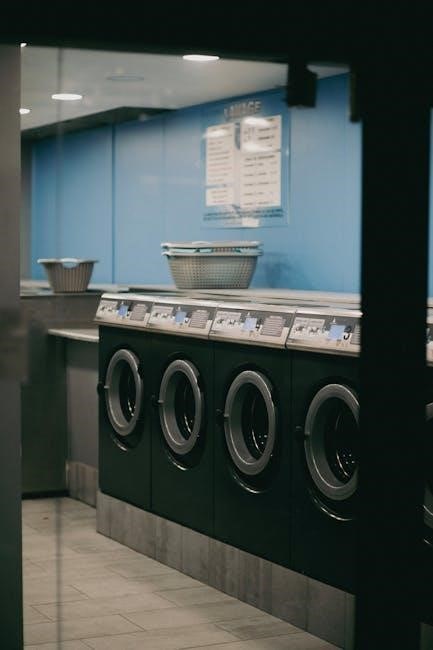
When storing the appliance, choose a dry, frost-free location. Avoid direct sunlight and extreme temperatures. Keep the machine upright to prevent water remaining in the hoses from causing issues. Remove any remaining items from the drum before storage.







Leave a Comment